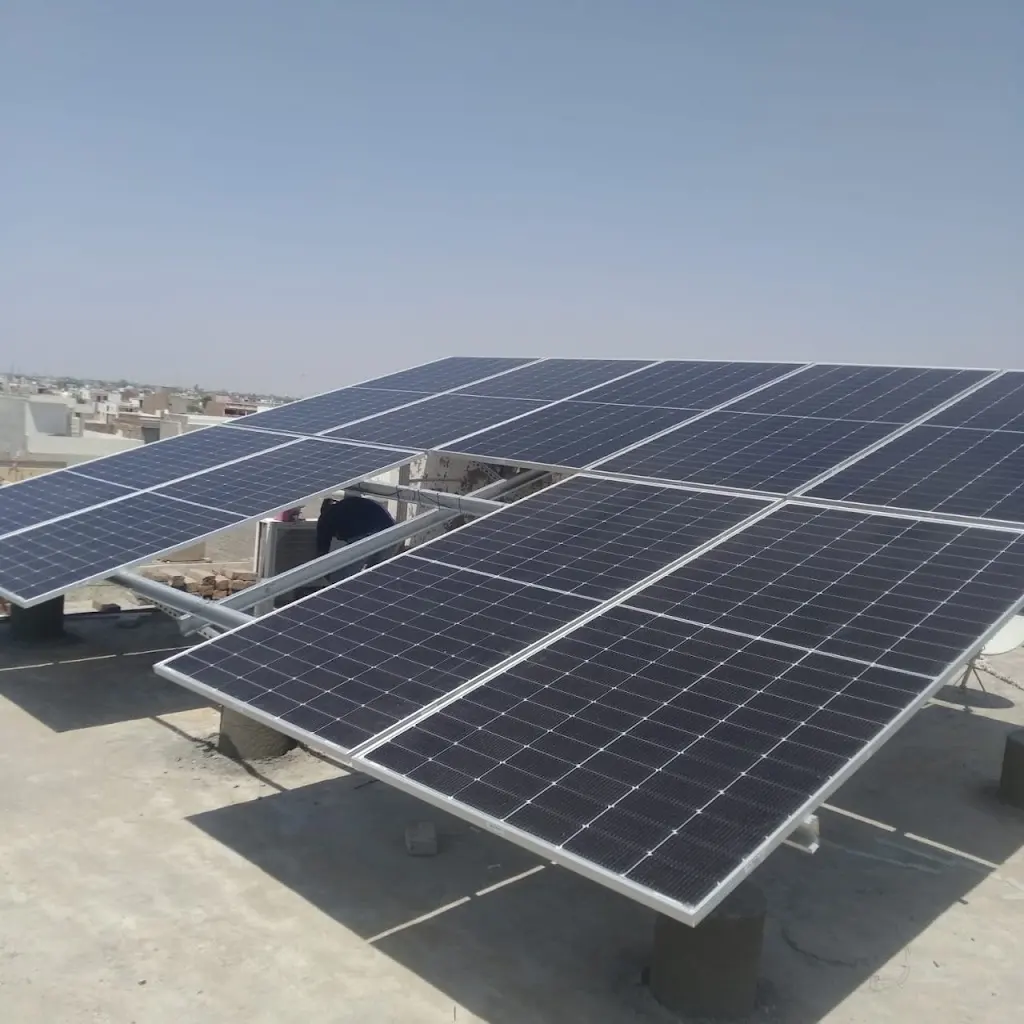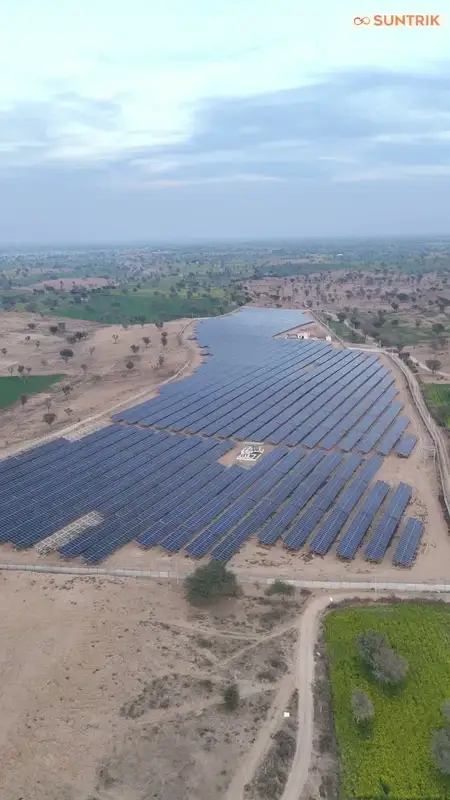
PM-KUSUM (Pradhan Mantri Kisan Urja Suraksha evam Utthaan Mahabhiyan) is the central government's scheme to bring solar power to farms. Component A lets farmers earn money by hosting a small solar power plant on their land; Component C cuts a farmer's irrigation power cost by putting solar on an existing grid-connected pump. The two work very differently, including how the subsidy is paid.
Under MNRE's guidelines the scheme targets 34,800 MW of solar capacity with ₹34,422 crore of central support. The original deadline was 31 March 2026; on 28 March 2026 MNRE extended the completion deadline to 31 March 2027 for projects whose PPA or notice to proceed was issued by 31 December 2025. A successor phase, PM-KUSUM 2.0, is being prepared.
The three components at a glance
- ✓Component A: 10,000 MW of small grid-connected solar plants (500 kW to 2 MW) on farmland
- ✓Component B: 14 lakh standalone solar pumps for farms without a grid connection
- ✓Component C: solarisation of 35 lakh existing grid-connected pumps, individually (IPS) or for a whole agriculture feeder (FLS)
Component A — earn from a solar plant on your land
Individual farmers, groups of farmers, cooperatives, panchayats, Farmer Producer Organisations (FPOs) and water user associations can set up a solar plant of 500 kW to 2 MW on barren, fallow or cultivable land. Plants on cultivable land are usually raised on stilts so farming can continue underneath.
The DISCOM buys all the power at a feed-in tariff fixed by the State Electricity Regulatory Commission, under a long-term power purchase agreement (PPA). A farmer who cannot invest can lease the land to a developer, who builds and runs the plant and pays rent.
Component A has no capital subsidy for the farmer. Instead MNRE pays the DISCOM a performance-based incentive of ₹0.40 per unit bought, or ₹6.6 lakh per MW per year, whichever is lower, for five years. The farmer's return comes from selling the power (or from the land lease).
- ✓Land: typically 4–5 acres per MW, close to a 33/11 kV substation
- ✓Income: tariff × units generated, paid by the DISCOM
- ✓Financing: bank loans are commonly used; lenders look at the PPA and the tariff
Component C — solar for your existing pump
If your farm already has a grid-connected pump, Component C adds solar panels to it. Under individual pump solarisation (IPS) the panels are sized up to twice the pump capacity in kW; the pump runs on solar during the day and surplus power is sold to the DISCOM. Under feeder-level solarisation (FLS) a single solar plant supplies the whole agriculture feeder.
The centre pays 30% of the benchmark cost as Central Financial Assistance (CFA) for IPS, and 30% (up to ₹1.05 crore per MW) for FLS. In the north-eastern and hill states the central share is 50%. The state government usually adds its own share and the farmer pays the rest, often with a bank loan. State top-ups differ and change from year to year — in Haryana, check the current farmer share with HAREDA or on the Saral Haryana portal before you apply.
Which component is right for you?
- ✓You own 2 acres or more of land near a substation and want a steady income → Component A
- ✓You already pay for power for a grid-connected pump and want lower bills plus income from surplus → Component C (IPS)
- ✓Your farm has no grid connection → Component B (standalone pump)
Where the scheme stands in 2026
Projects already awarded before 31 December 2025 can be completed until 31 March 2027 under the current rules. New applications depend on each state's open rounds and on PM-KUSUM 2.0 once it is notified. Watch HAREDA (Haryana) and RRECL (Rajasthan) announcements for new allocation rounds.
How Suntrik helps
Suntrik builds ground-mount PM-KUSUM plants and solarises pumps in Haryana and Rajasthan — including site and substation checks, the application and DPR, HAREDA coordination, installation, DISCOM inspection and subsidy follow-up.